
TL;DR
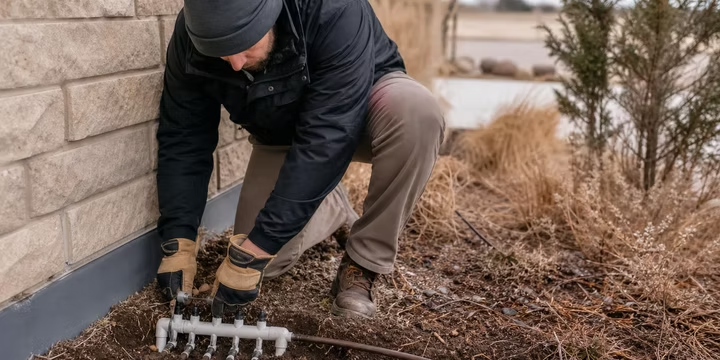
Winterizing drip lines and low-pressure systems requires different techniques than standard sprinkler winterization because drip components are smaller, thinner, and operate at far lower pressures. In Lubbock and West Texas, freeze risk begins around late October, and city ordinance prohibits irrigation below 35°F. The priority is draining and protecting above-ground components (backflow preventers, pressure regulators, filters), using compressed air at no more than 25 PSI for drip lines, and verifying freeze sensor operation. Skip this process and you risk cracked emitters, split tubing, and expensive spring repairs.
Drip irrigation is growing fast across West Texas. Homeowners add drip zones to flower beds, vegetable gardens, and foundation plantings because they save water and deliver it precisely where plants need it. But when temperatures drop, those same systems that work so efficiently in summer become surprisingly fragile.
Winterizing drip lines and low-pressure systems is not the same as winterizing a standard sprinkler system. The components are smaller. The tubing walls are thinner. The operating pressures are a fraction of what PVC sprinkler lines handle. Treating a drip system like a sprinkler system during winterization, whether by blasting it with too much compressed air or ignoring it entirely, leads to cracked emitters, burst tubing, and failed pressure regulators.
This glossary covers every term you need to understand the winterization process for drip and low-pressure irrigation, with specific attention to Lubbock freeze timing, city ordinance requirements, and the reality of West Texas weather.
Why Drip and Low-Pressure Systems Need Special Winterization
Most winterization guides on the internet are written for standard sprinkler systems with PVC mainlines and pop-up heads rated for 40 to 65 PSI. Drip systems operate in a completely different range, typically 15 to 30 PSI, and this lower operating pressure is precisely what makes them more vulnerable to freeze damage, not less.
Here is the core problem: when water freezes, it expands by roughly 9% in volume. In a thick-walled PVC sprinkler pipe, that expansion might cause a hairline crack. In thin-walled polyethylene drip tubing with emitters containing tiny internal passages, that same expansion cracks components outright.
Three factors make drip and low-pressure systems uniquely susceptible:
- Thinner tubing walls. Drip tubing is made of flexible polyethylene, much thinner than Schedule 40 PVC. It simply cannot absorb the pressure that ice expansion creates.
- Precision components with small passages. Emitters, micro-sprayers, and drippers have internal openings measured in fractions of a millimeter. A single freeze event can crack these passages.
- Pressure regulators and filters hold standing water. These above-ground components trap water in internal chambers that freeze before anything underground does.
Practitioners on Reddit’s r/Irrigation forum frequently ask about compressor sizing specifically for drip, which highlights how widely recognized this difference is among people who actually maintain these systems. The answer matters because getting it wrong, even by 10 PSI, can destroy what you are trying to protect.
For a deeper look at how pressure works across different system types, see our guide on water pressure in irrigation systems.
Core Winterization Terms for Drip and Low-Pressure Systems
Winterization (Irrigation Context)
Winterization is the process of removing water from an irrigation system to prevent freeze damage. For drip lines specifically, this means draining or blowing out residual water, relieving pressure, and storing sensitive components indoors where freeze-thaw cycles cannot reach them.
In West Texas, winterization does not always mean a full seasonal shutdown. Many years call for event-based winterization, where you drain and insulate before a predicted freeze, then resume watering during warm spells. This partial approach is common in Lubbock’s climate, where a 70°F day in December can follow a hard freeze by 48 hours.
Drip Line / Drip Tubing
Thin-walled polyethylene tubing that delivers water directly to plant root zones at low flow rates. Drip tubing comes in various diameters (typically 1/4-inch for micro-tubing and 1/2-inch to 3/4-inch for mainline laterals), and all of it is more vulnerable to ice damage than rigid PVC pipe. The 9% volume expansion of freezing water is enough to split these lines at connection points or along their length.
Low-Pressure System
Any irrigation system operating well below standard sprinkler pressure, typically 15 to 30 PSI compared to 40 to 65 PSI for conventional sprinklers. Drip zones, micro-spray heads, and bubblers all fall into this category. Their components, including pressure regulators, emitters, and micro-tubing, are physically smaller and more delicate. This means both the winterization method and the blowout pressure must be adjusted downward.
Compressed-Air Blowout
Using an air compressor to force residual water out of irrigation lines through open end caps. This is the most thorough method for removing trapped water, especially from low spots where gravity drainage fails.
The critical difference for drip systems is pressure. Standard sprinkler blowouts use 40 to 80 PSI. That will destroy drip components. The safe consensus across multiple industry sources is 15 to 25 PSI for drip tubing, with some manufacturers recommending as low as 10 to 20 PSI for micro-spray lines.
One important distinction that many homeowners miss: air pressure and water pressure behave differently. Compressed air does not cushion the way water does, so 30 PSI of air hits components harder than 30 PSI of water. Keep blowout duration to two minutes or less per zone to prevent overheating and component damage.
Gravity Drain / Manual Drain
Opening end caps and allowing water to flow out of drip lines by gravity. This involves walking mainlines, lifting tubing at low spots, and opening fittings to release trapped water. On sloped properties, gravity drainage works well and avoids the risks of compressed air entirely.
The limitation is flat terrain. On level ground, water pools in low spots, valve chambers, and trapped sections that gravity simply cannot clear. In those cases, a low-pressure compressed-air blowout becomes necessary.
Flush Cap / End Cap
The removable cap at the terminal end of each drip line. Before winterizing, remove all end caps to give water and air a clear exit path. After draining, replace end caps loosely. This keeps debris and insects out during winter while still allowing any residual water to seep out naturally. Tight caps trap moisture, which defeats the purpose.
Pressure Regulator
A device installed between the water supply and drip zones to reduce incoming pressure to the system’s operating range. Pressure regulators maintain consistent flow to emitters, but their internal mechanisms contain chambers where water sits even after the main line is depressurized. If that water freezes, the internal diaphragm or spring cracks.
Pressure regulators should be removed and stored indoors before the first freeze. This is one of the most commonly overlooked steps in winterizing drip lines and low-pressure systems.
Backflow Preventer / Assembly
An above-ground device that prevents contaminated irrigation water from flowing backward into your potable water supply. Texas A&M specifically names backflow prevention assemblies as above-ground components that must be drained during winterization. If a backflow preventer cracks from freeze damage, you face replacement cost, a mandatory retest by a licensed backflow tester, and potential contamination risk.
In Lubbock, backflow compliance is not optional. For full details on testing requirements, see our Lubbock backflow compliance guide.
Freeze Sensor
An electronic sensor that shuts down your irrigation system when temperatures drop to a set threshold. Lubbock city code requires automatic irrigation systems to include freeze sensors that render the system inoperative at 35°F or higher. This is a legal requirement, not just a best practice. Freeze sensors often share an interface with rain sensors on smart controllers.
If your system uses a Hydrawise or similar Wi-Fi controller, you can learn about pairing wireless sensors with your setup.
Automatic Drain Valve
A valve installed at the lowest point in a drip system that opens automatically when system pressure drops (i.e., when the zone shuts off). These valves eliminate standing water from low spots after every watering cycle, which provides a head start on winter drainage. They are especially useful in flat yards where gravity drainage alone is unreliable.
Automatic drain valves help, but they do not replace full winterization. They cannot drain water from above-ground components, filters, or pressure regulators.
Freeze-Thaw Cycle
The repeated pattern of temperatures dropping below 32°F at night and rising above freezing during the day. This is not a single freeze event but a cumulative process. Water seeps into micro-cracks during the thaw, freezes again, and widens the damage with each repetition.
West Texas is particularly punishing in this regard. Lubbock routinely experiences temperature swings of 30 to 40 degrees in a single day during winter months. A drip system that survived one freeze might fail on the third or fourth cycle as small cracks propagate.
Insulation (Pipe Wrap / Heat Tape)
Foam pipe wrap, insulation tape, or electric heat tape applied to exposed above-ground irrigation components. Texas A&M recommends insulating all exposed PVC and above-ground fittings as a core winterization step in Texas.
For drip systems, the focus is on insulating the backflow preventer, any above-ground supply lines, and exposed valve assemblies. Underground drip tubing buried even a few inches is generally protected by soil temperature, but anything above grade is exposed to air temperature and wind chill.
Pre-Winter Chlorination Flush
A cleaning step recommended by University of Georgia extension services: run a dilute chlorine solution through drip lines before seasonal shutdown. This prevents biological buildup (algae, bacterial slime) from hardening inside emitters during months of dormancy. Debris left in the system over winter can solidify and clog drip emitters, reducing system efficiency when you restart in spring.
Most national winterization guides skip this step entirely. It takes 20 minutes and can save you from replacing clogged emitters across an entire zone.
Spring Recommissioning
The process of bringing a winterized system back online. For drip and low-pressure systems, this means reinstalling stored components (pressure regulators, filters, timers), slowly pressurizing the system, and checking each zone individually for leaks before running at full pressure.
The key word is “slowly.” Turning on full pressure after months of dormancy can blow fittings that were loosened by freeze-thaw cycles. Start at low pressure, inspect every connection, then gradually increase.
Safe Blowout PSI by System Type
This table is the single most important reference for anyone winterizing drip lines and low-pressure systems with compressed air. Getting the pressure wrong causes the very damage you are trying to prevent.
Never exceed 30 PSI on any drip component. Pressures above 30 PSI also pose a safety risk, as compressed air at that level can cause harm to skin and eyes. Limit each blowout run to two minutes per zone maximum.
Lubbock and West Texas Winterization Timing
National guides telling you to winterize “before the first frost” are not specific enough for West Texas. The timing here matters because our freeze season is long, punctuated by warm spells, and starts earlier than many people expect.
Lubbock first frost probabilities:
- There is a 20% chance of reaching 32°F by November 1
- A 50% chance by approximately November 11
- Risk of frost realistically begins around October 28
Based on these numbers, the best time to winterize a drip irrigation system in Lubbock is late October to early November. Waiting until Thanksgiving is gambling.
City of Lubbock ordinance requirements:
- City Ordinance 22.08.039 prohibits irrigating when temperatures are below 35°F
- The city’s annual fall and winter irrigation restrictions take effect October 1 and continue through March 31
- Irrigating during freezing events is a violation and may lead to fines
Freeze sensors are legally required on covered automatic irrigation systems in Lubbock. They must render the system inoperative at 35°F or higher and include rain sensors that stop irrigation at 1/4 inch of moisture.
Event-Based vs. Seasonal Winterization
This is where West Texas diverges from northern states. In Minnesota or Colorado, you blow out your system in October and do not touch it until April. In Lubbock, a full compressed-air blowout is typically reserved for extended hard freezes or complete system shutdown. Most years, the priority is:
- Draining and insulating above-ground components before each predicted freeze
- Ensuring freeze sensors are functional
- Removing pressure regulators and filters if an extended cold snap is forecast
- Running the system during warm periods when soil moisture is needed
This partial, event-based approach to winterizing drip lines and low-pressure systems reflects the reality of a climate where you might water on Tuesday, freeze on Wednesday, and be back to 65°F by Friday.
For broader plant protection strategies during Lubbock freezes, see our freeze protection glossary guide.
Most Vulnerable Components, Ranked by Damage Frequency
Not all parts of a drip system face equal risk. Based on a synthesis of manufacturer data and practitioner reports, here is how components rank from most to least vulnerable during freeze events:
1. Pressure regulators. Water trapped inside the housing cracks the internal diaphragm. This is the most frequently damaged component because homeowners forget to remove it, and it holds water even after the mainline is depressurized.
2. Backflow preventer assemblies. Mounted above ground, fully exposed to air temperature, and containing internal chambers where water sits. A cracked backflow preventer means replacement, retesting, and potential water supply contamination. Learn to spot the signs your backflow assembly is leaking before small damage becomes a bigger problem.
3. Emitters and drippers. The most delicate components in any drip system. Their tiny internal passages crack easily when frozen water expands. A single freeze can destroy dozens of emitters across a zone.
4. Filters. Filter housings trap water and sediment. The housing itself can crack, or frozen sediment can damage the filter mesh, reducing its effectiveness even if the housing survives.
5. Thin-walled poly tubing. While more flexible than PVC, polyethylene tubing can still split when water freezes inside, particularly at connection points and where tubing passes through compression fittings.
6. Fittings and connections. Even a small ice plug can create localized pressure that loosens fittings, causes micro-cracks, or splits barbed connections. These failures often go unnoticed until spring, when they show up as low pressure or soggy spots.
Freeze damage from January 2026 in Lubbock demonstrated this pattern clearly. Local news reported that burst pipes went undetected during the cold, only revealing themselves as temperatures rose and pressurized water hit the cracked components. The same dynamic plays out in drip systems, just with smaller, harder-to-spot failures.
If you discover pressure loss in spring, our guide on diagnosing low water pressure can help you trace the problem.
Step-by-Step Summary: Winterizing a Drip System
While this page is a glossary, it helps to see how these terms connect in practice. Here is the condensed procedure for winterizing drip lines and low-pressure systems:
- Shut off the water supply at the main isolation valve.
- Run each zone through the controller to relieve residual line pressure.
- Remove vulnerable components: filters, pressure regulators, battery-powered timers, and the backflow preventer if it is detachable. Drain and store these indoors. Remove batteries from any timers. A dedicated storage box keeps everything together for easy spring reinstallation.
- Drain the lines. Open all flush caps. Lift tubing at low spots to release trapped water. If gravity is not sufficient (flat yards, long runs), use compressed air at 25 PSI or less.
- Insulate above-ground components that cannot be removed: exposed supply pipe, backflow assembly housing, valve boxes near the surface.
- Replace end caps loosely to block insects and debris while still allowing residual moisture to escape.
- Set the controller to “off” or “rain mode.” Do not disconnect it entirely, as this can erase programming.
- Verify freeze sensor operation. In Lubbock, this is a code requirement. Test it before the first frost, not during.
What Happens When You Skip Winterization
The consequences of ignoring drip and low-pressure winterization are not always immediately obvious. Unlike a burst PVC mainline that floods your yard, drip damage tends to be subtle and cumulative.
Immediate freeze damage: Cracked pressure regulators, split emitters, and loose fittings. You will not notice any of this until spring startup, when zones run with low pressure, uneven distribution, or visible leaks.
Cumulative freeze-thaw damage: Even if a single freeze does not crack a component outright, repeated freeze-thaw cycles progressively weaken materials. Water seeps into microscopic cracks during each thaw, freezes again, and widens the damage. By late February, components that “survived” December may fail entirely.
Spring discovery costs: Hidden cracks from winter freeze damage typically show up as unexplained low pressure, soggy spots around buried fittings, or emitters that no longer flow. Diagnosing and repairing multiple failures across a drip zone costs significantly more than the 30 minutes it takes to winterize properly in October.
If you find broken irrigation lines after winter, act quickly before water waste compounds the repair cost.
Frequently Asked Questions
Can I just let my drip system freeze without winterizing it?
You can, but you will probably pay for it. Drip components are smaller and thinner than sprinkler parts, which means the 9% volume expansion of freezing water cracks them more easily. Even a mild freeze can destroy emitters and crack pressure regulators. The repair cost in spring will far exceed the time investment of proper winterization.
What PSI should I use to blow out drip lines?
Keep compressed air at 15 to 25 PSI for standard drip tubing. For micro-spray and micro-sprinkler lines, stay in the 10 to 20 PSI range. Never exceed 30 PSI on any drip component. Standard sprinkler blowout pressure (40 to 80 PSI) will destroy drip system components.
Do I need a full blowout every year in Lubbock?
Not necessarily. West Texas typically calls for event-based winterization rather than a full seasonal shutdown. Focus on draining and insulating above-ground components before each predicted freeze event, and save full compressed-air blowouts for extended hard freeze forecasts or complete seasonal shutdowns.
Is it a legal requirement to have a freeze sensor in Lubbock?
Yes. Lubbock city code requires automatic irrigation systems to include freeze sensors that shut the system down at 35°F or higher. Irrigating during freezing conditions violates City Ordinance 22.08.039 and may result in fines.
Which drip system component fails most often from freeze damage?
Pressure regulators rank first. They hold trapped water in internal chambers even after the main line is depressurized, and homeowners frequently forget to remove them before winter. Backflow preventers are a close second due to their above-ground exposure.
When should I winterize my drip system in Lubbock?
Late October to early November. Frost risk begins around October 28, with a 50% probability of 32°F temperatures by approximately November 11. The city’s fall and winter irrigation restrictions take effect October 1.
Can I flush my drip lines before shutting down for winter?
Yes, and you should. Running a clean water flush (or a dilute chlorine solution) through drip lines before draining prevents biological buildup from hardening inside emitters over winter. Skipping this step often leads to clogged emitters that reduce system performance in spring.
What is the difference between winterizing drip lines and winterizing standard sprinklers?
The main difference is pressure. Drip systems use thinner tubing, smaller components, and operate at 15 to 30 PSI, so both the blowout method and storage requirements must be adjusted. Standard sprinkler blowout pressures (40 to 80 PSI) will damage drip components. Additionally, drip systems have more removable parts (pressure regulators, filters, end caps) that should be taken off and stored indoors.
Winterizing drip lines and low-pressure systems is straightforward once you understand why these systems need gentler treatment than standard sprinklers. The terms and thresholds in this glossary give you the reference points to protect your investment, stay compliant with Lubbock ordinances, and avoid expensive spring repairs.
If you would rather have a professional handle the process, or if you want seasonal maintenance built into a recurring plan, M&M’s maintenance membership options include scheduled system checkups, seasonal programming adjustments, and priority scheduling during freeze season.