
TLDR
Sprinkler low water pressure means your system has dropped below the PSI needed for heads to spray properly, usually below 30 PSI for spray heads or 45 PSI for rotors. The most common causes range from partially closed valves, clogged nozzles, and faulty zone or master valves to underground leaks, backflow preventer issues, undersized piping, and zone overload. Diagnosing the problem starts by figuring out whether pressure is low across all zones, one zone, or just one head, then working through the causes specific to that scope.
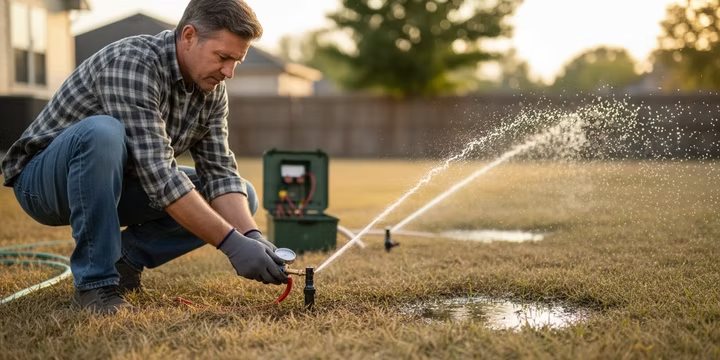
A sprinkler system with low water pressure shows you the problem before it tells you. Spray heads produce a weak, floppy arc instead of a crisp fan. Rotors barely rotate. Pop up heads stick halfway out of the ground. Dry patches appear in spots that should be getting full coverage. What you’re seeing is water pressure that has dropped below the operating threshold your sprinkler heads need to function correctly.
The frustrating part is that sprinkler low water pressure has a dozen possible causes, and most of them look identical from the surface. A clogged nozzle and an underground pipe leak can produce the same limp spray pattern. This guide defines exactly what counts as low pressure, walks through a diagnostic framework to narrow the cause, and covers fixes ranging from five minute DIY checks to repairs that require professional equipment.
If you already know your system needs hands on help, M&M Sprinklers’ repair services cover everything from single head replacements to full zone redesigns across Lubbock and West Texas.
What Counts as “Low” Pressure: PSI Benchmarks by Head Type
Most homeowners say their sprinkler pressure is “low” based on how it looks, which is a reasonable starting point. But sprinkler low water pressure has measurable thresholds. According to Oklahoma State University Extension research, different head types need different operating pressures:
Residential water supply typically falls between 40 and 80 PSI at the meter, with around 60 PSI considered ideal. If your supply is 50 PSI and you have rotors that want 45, the margin is razor thin once you account for pressure losses between the meter and the sprinkler head.
If your system includes drip zones, those thresholds are different enough to warrant separate troubleshooting. Our guide on fixing drip irrigation pressure covers that specific situation in detail.
Static Pressure vs. Dynamic Pressure
This distinction trips people up constantly. Static pressure is what you measure when no water is flowing. Dynamic pressure is what you measure with a zone running. Your static reading at the hose bib might look perfectly healthy at 55 PSI. But once six or eight sprinkler heads open simultaneously on a zone, the dynamic (working) pressure might drop to 25 PSI, well below what your rotors need.
Always test with zones running. A static only reading will give you a false sense of security.
Pressure vs. Flow Rate: Why This Distinction Matters
Pressure and flow rate are related but separate measurements, and confusing them leads to misdiagnosis. Pressure (measured in PSI) is force per square inch. Flow rate (measured in GPM, gallons per minute) is volume over time.
You need both. A system can have adequate pressure but insufficient flow if the supply pipe is too small or too many heads are pulling from one zone. For example, a Rain Bird 5000 rotor running at 35 PSI uses about 3.11 GPM. If your home’s supply delivers 10 GPM, you can run a maximum of three of those rotors on a single zone before flow becomes the bottleneck, even though pressure technically looks fine.
This is why a 42 year irrigation veteran, Bob Carr, argues that “most irrigation problems are not caused by broken equipment, they are caused by imbalanced system design.” Understanding the difference between pressure and flow is step one in understanding system design. For more context on how different sprinkler head types affect flow demands, that guide breaks it down by category.
Diagnostic Framework: Where Is the Problem?
The single most useful question when troubleshooting sprinkler low water pressure is: how many zones are affected? The answer immediately narrows your list of possible causes.
Whole System Pressure Loss (All Zones Affected)
If every zone in your system shows weak pressure, the problem sits upstream of where zones split off. These are the most common causes of sprinkler low water pressure across the entire system:
Partially closed valve. Sometimes the solution is genuinely this simple. The main shutoff valve, the backflow preventer handle, or a curb stop valve may not be fully open. This happens after winterization, after plumbing work, or after a backflow test where someone forgot to reopen a valve all the way. A quarter turn handle should be parallel with the pipe. A gate valve should be turned counterclockwise until it stops.
Check your water meter for a leak. Before you start pulling apart sprinkler components, it is worth ruling out a supply side leak that is stealing water before it ever reaches your irrigation system. Shut off all water use in the house and at the irrigation system, then watch the low flow indicator on your water meter (the small triangle or dial). If it is still spinning, water is leaving the system somewhere. This could mean a leak in the main supply line between the meter and your house, or between the house and the irrigation tie in point. Practitioners on Reddit describe using this exact method to discover hidden leaks they never would have found by looking at the sprinkler heads alone. A spinning meter with everything off is a clear signal to call a professional for leak detection rather than chasing problems zone by zone.
Faulty master valve. Many irrigation systems include a master valve, a single valve installed on the mainline between the water supply and all zone valves. When the controller sends a signal, the master valve opens first, then the zone valve opens. If the master valve’s solenoid is weak, its diaphragm is partially stuck, or debris has lodged in the valve body, it will restrict flow to every zone equally. This is a sneaky cause because the system still operates (zones turn on, heads pop up), but everything runs at reduced pressure. Unlike a zone valve problem that affects one zone, a master valve issue mimics a supply side failure. The quickest test: manually open the master valve’s bleeder screw or flow control. If pressure to all zones improves, you have found the culprit. For a deeper walkthrough on diagnosing valve and solenoid issues, that guide covers testing procedures step by step.
Backflow preventer malfunction. This is one of the most under recognized causes of sprinkler low water pressure. Backflow devices, particularly RPZ (Reduced Pressure Zone) assemblies, consume a significant amount of pressure even when working correctly. A standard ¾ inch RPZ at 20 GPM flow will drop pressure by approximately 12.5 PSI. If the internal O ring fails or debris gets stuck in the check valves, that loss gets worse. Many homeowners have no idea their backflow device is eating 10+ PSI before water even reaches the first head.
If you suspect your backflow device is the culprit, our RPZ backflow preventer guide explains how these devices work, what can go wrong, and when testing or repair is needed.
Municipal supply pressure drop. Summer heat increases municipal demand across the entire city distribution system, and pressure dips hardest during late afternoon when everyone waters at the same time. In Lubbock and across West Texas, this is a predictable pattern. Watering between 4 AM and 8 AM avoids the worst pressure dips and is generally recommended by local water utilities anyway.
Whole house filter or water softener in line with irrigation. If your irrigation plumbing routes through a home filtration system or water softener, those devices restrict flow significantly. The fix is connecting the irrigation line upstream of any filtration. This is more common than you would expect in newer installations.
Pressure regulator set too low or failing. Many homes have a pressure reducing valve (PRV) at the main line. Factory settings typically fall between 45 and 55 PSI, but one practitioner from Chuck’s Landscaping notes these can usually be adjusted to 70 PSI without adding significant strain to your plumbing system. If the regulator is malfunctioning, it may restrict pressure well below its set point.
Undersized or aging supply pipe. This is a structural cause that no amount of valve adjustment or head cleaning will fix. Many older homes in Lubbock and surrounding towns like Levelland, Littlefield, and Post were built with ¾ inch or even ½ inch galvanized steel supply lines connecting the water meter to the house and irrigation system. Galvanized pipe corrodes from the inside over decades, and the internal diameter shrinks as mineral scale builds up along the pipe walls. A ¾ inch galvanized line that was installed 30 or 40 years ago may have an effective internal diameter closer to ½ inch today.
The result is a pipe that physically cannot deliver enough volume at adequate pressure, no matter how healthy the rest of the system is. According to engineering friction loss tables, a ¾ inch pipe flowing at 12 GPM loses roughly 5 PSI per 100 feet. Scale that pipe’s interior down to an effective ½ inch, and the friction loss per 100 feet can more than triple. In Lubbock’s hard water environment (12.5 grains per gallon), this deterioration happens faster than in soft water regions.
Signs that aging pipe is the bottleneck include sprinkler low water pressure across all zones regardless of time of day, rust colored water when the system first kicks on, and a noticeable difference between your static meter pressure and the dynamic pressure at the hose bib closest to the house. If your meter reads 60 PSI static but you are only seeing 30 PSI dynamic at the hose bib with a single zone running, the pipe between those two points is the restriction.
The fix is replacing the supply line with appropriately sized polyethylene or PVC pipe. This is not a DIY project for most homeowners, but it is a permanent solution. For systems where the mainline from the irrigation tie in to the valve manifold is undersized, a professional can upsize that segment without touching the household plumbing. If you are weighing whether a full system overhaul makes sense, our guide on retrofit costs for older systems breaks down what to expect.
Single Zone Pressure Loss
When only one zone has low pressure while the others work fine, the problem is isolated to that zone’s components.
Underground leak or broken pipe. Even a small crack in the irrigation line allows water to escape before it reaches the heads, robbing that zone of both pressure and flow. Warning signs include wet spots when the system is off, unusually green patches in one area, or water pooling near valve boxes. Our guide on detecting underground leaks walks through how to locate these, even when there are no visible surface puddles.
Zone overloaded with too many heads. When a single zone demands more water than the supply can provide, each head receives less pressure and produces a weak spray pattern. This is especially common in older systems where homeowners added new planting areas and tapped new heads into existing zones without recalculating flow capacity.
Faulty zone valve or solenoid. A valve that will not fully open mechanically restricts flow to that zone. If the solenoid is failing, it may only partially energize the valve. The diaphragm inside the valve can also warp, tear, or accumulate debris over years, preventing the valve from achieving full open position. Practitioners on lawn care forums describe cases where a single zone suddenly lost pressure while other zones from a different valve box were partially spraying when they should not have been, indicating valve bleed through rather than a simple clog. If you notice zones bleeding into each other, check for signs of a bad solenoid.
To test a suspect zone valve, try manually opening it using the bleeder screw or solenoid quarter turn. If the zone runs at full pressure when opened manually but not when activated by the controller, the problem is electrical (solenoid, wiring, or controller output). If pressure is still low when opened manually, the valve body itself is the restriction, whether from a torn diaphragm, debris in the valve seat, or a flow control stem that has been dialed down.
Timer overlap. This is a cause that most articles on sprinkler low water pressure miss entirely. Chuck’s Landscaping identifies timer problems as the most common cause of intermittent low pressure in one zone. If your controller schedules two zones with overlapping or back to back run times and one timer is slightly delayed, both zones may briefly run simultaneously, splitting the available pressure and flow between them.
Tree root intrusion. Tree and bush roots can wrap around or grow through buried irrigation pipes over time, gradually pinching off the line and reducing pressure to that zone. This develops slowly, so the pressure loss is gradual rather than sudden. For more on how this happens and what to look for, see our article on how tree roots cause line breaks.
Single Head Pressure Loss
If only one sprinkler head is weak while the rest of the zone performs normally, the problem is almost always at that head.
Clogged nozzle. Dirt, grass clippings, and mineral deposits restrict the nozzle orifice. This is particularly frequent in Lubbock and West Texas because the local water supply measures 12.5 grains per gallon, classified as “very hard.” Every gallon flowing through the system carries the equivalent of nearly 8 ounces of dissolved rock minerals, and those minerals accumulate in nozzle orifices and filter screens over time. Regular cleaning is the best defense. Here is a step by step guide on how to clean sprinkler heads and restore proper spray.
Damaged or cracked head body. A lawnmower strike or freeze crack in the head body allows water to leak at the base instead of spraying through the nozzle. The head may still pop up but will not produce adequate pressure at the tip.
Low head drainage. The lowest head on a zone can lose pressure as water drains downhill through it after the zone shuts off. This is more of a drainage issue than a true pressure problem, but it mimics the same symptoms when the zone first starts up. Installing a check valve at the head solves this.
How to Test Your Sprinkler Pressure
You do not need professional equipment for a basic pressure test. A hose bib pressure gauge costs $10 to $15 at any hardware store. Here is how to confirm whether you actually have sprinkler low water pressure or whether the problem is something else:
- Attach the gauge to the outdoor hose bib closest to your irrigation connection point.
- With everything off (no faucets, no appliances using water), read the static pressure.
- Turn on one zone at a time and read the dynamic pressure while it runs.
- Record the reading for each zone. A zone with noticeably lower dynamic pressure than the others has a problem isolated to that zone.
- For a rough flow rate check, time how long it takes to fill a five gallon bucket from the hose bib with no other water running. Divide five by the number of minutes. That gives you an approximate GPM.
Compare your readings to the head type benchmarks above. If static pressure is strong but dynamic drops dramatically when a zone kicks on, you likely have too many heads on that zone, a leak somewhere in the line, or a partially restricted valve.
A professional on plumbing forums recommends a more targeted approach for isolating single zone issues: pull each sprinkler head in the affected zone, cap the adapters, then turn the zone on. If pressure returns, the leak is at one of the heads. If pressure stays low, the leak is in the pipe itself.
Bonus: the water meter leak test. Before running zone by zone diagnostics, do the meter check described above. Turn off all water in the house, close the irrigation system’s main valve, and watch the meter’s low flow indicator. If it moves, you have a leak between the meter and your shutoff point. This five minute test can save hours of chasing the wrong problem inside the irrigation system.
Fixes for Sprinkler Low Water Pressure: From Quick DIY to Professional Repair
What You Can Handle Yourself
- Open all valves fully (main shutoff, backflow handles, curb stop)
- Clean or replace clogged nozzles and head screens
- Adjust your watering schedule to early morning hours (4 to 8 AM) to avoid peak municipal demand
- Check your controller programming for overlapping zone start times
- Inspect the pressure regulator and adjust if it is set too low
- Run the water meter leak test to rule out a supply side leak
Gray Area (Some Skill Required)
- Flushing lateral lines by removing end heads and running the zone
- Replacing individual heads or nozzles
- Adjusting timer programming and staggering zone start times with adequate gaps
- Testing backflow preventer handles and isolation valves for full operation
- Manually opening a zone valve to determine if the restriction is mechanical or electrical
Call a Professional
- Underground leak detection and pipe repair
- Zone redesign to redistribute heads across multiple zones
- Backflow preventer repair, replacement, or annual testing and certification
- Booster pump installation for chronically low municipal supply pressure
- Pipe upsizing to reduce friction loss (especially replacing corroded galvanized lines)
- Master valve repair or replacement
- Diagnosing tree root intrusion (especially where roots have wrapped around or penetrated lines)
If you are not sure whether your situation is DIY or professional territory, our guide on when to call a pro for sprinkler failures helps you draw that line.
What These Repairs Typically Cost
Most pressure related sprinkler repairs cost between $50 and $500. For more complex situations, Bob Carr’s cost breakdowns from over four decades in the field offer useful specifics:
- Too many heads on one zone (zone redesign): $300 to $900
- Clogged or worn heads: $75 to $250 per affected area
- Underground pipe leaks: $200 to $800 depending on depth and location
- Valve problems (zone valve or master valve): $150 to $400 per valve
- Pressure regulator issues: $200 to $600
- Supply line replacement (undersized or corroded pipe): $500 to $2,000+ depending on length and accessibility
If you are dealing with sprinkler low water pressure across your whole system or suspect underground leaks, a professional diagnostic is usually worth the cost. Guessing leads to digging in the wrong places. M&M Sprinklers technicians run each zone, inspect for leaks and coverage issues, check backflow status, and identify exactly where pressure is being lost before recommending repairs.
For a full breakdown of what repairs cost, see our sprinkler repair cost guide.
Prevention: Keeping Pressure Consistent Long Term
Fixing sprinkler low water pressure is one thing. Keeping it from coming back is another. A few habits make the difference:
Seasonal system checkups. Run each zone at the start of every watering season and watch the spray pattern. Catching a weak zone in March is far cheaper than discovering brown patches in July. Our seasonal maintenance checklist covers the full inspection process.
Regular head cleaning. In hard water areas like Lubbock, mineral buildup is not a possibility but a certainty. Cleaning nozzles and screens twice per season (at minimum) prevents the gradual pressure creep that ends with clogged heads.
Upgrade to pressure regulated heads. Pressure regulated spray bodies (often labeled PRS) maintain a consistent output pressure regardless of fluctuations in the supply line. They are especially useful in systems with variable municipal pressure.
Smart controllers with flow monitoring. Controllers equipped with flow sensors can detect pressure drops and abnormal flow in real time, alerting you to breaks or clogs before they become visible problems. M&M Sprinklers offers a Technology Plan that includes live flow monitoring, automatic alerts for breaks and clogs, pressure regulation, efficient nozzles, and weather based programming. You can read about next generation sprinkler technology in our dedicated overview.
Annual backflow testing. Beyond being a code requirement in most Texas municipalities, annual testing ensures your backflow device is not silently restricting flow. M&M Sprinklers has Texas licensed BPAT testers who can test, repair, and certify backflow preventers in house, so testing and any needed repairs happen in one visit. Details on the process and requirements are in our backflow testing compliance guide.
Know your pipe age. If your home was built before the mid 1990s and still has the original galvanized supply line, schedule a pressure test that compares meter pressure to dynamic pressure at the hose bib. A large gap between those two numbers is an early warning that internal corrosion is narrowing the pipe. Addressing it proactively avoids the slow decline that eventually starves every zone on the system.
FAQ
What PSI should a residential sprinkler system have?
Most residential systems work best between 30 and 50 PSI at the head, with the exact number depending on head type. Spray heads need about 30 PSI, rotors need about 45 PSI, and drip lines operate around 20 PSI. Your supply pressure at the meter should ideally be around 40 to 60 PSI to maintain adequate dynamic pressure once zones are running.
Why do my sprinklers have low pressure in summer?
Summer increases municipal water demand across the entire city distribution system. Pressure drops hardest during late afternoon and early evening when residential watering peaks. Switching your schedule to early morning (4 to 8 AM) typically resolves the issue. If pressure is low even at off peak hours, the cause is likely within your system rather than the city supply.
Can a backflow preventer cause sprinkler low water pressure?
Yes, and it is one of the most common hidden causes. A properly functioning ¾ inch RPZ backflow preventer drops pressure by 8 to 12+ PSI depending on flow rate. If internal components are fouled, damaged, or partially stuck, the loss can be even greater. A handle that is not fully open compounds the problem.
How do I check my sprinkler water pressure at home?
Attach a pressure gauge (available for $10 to $15 at hardware stores) to the outdoor hose bib closest to your irrigation connection. Read it first with all water off (static pressure), then again with one zone running (dynamic pressure). Compare zone by zone readings to identify which zone, if any, has a pressure problem.
How do I use my water meter to check for leaks?
Turn off all water fixtures in the house and shut down the irrigation system. Locate the low flow indicator on your water meter (usually a small triangle or spinning dial). If it is moving with everything off, water is leaking somewhere between the meter and your fixtures or irrigation system. This simple test takes less than five minutes and can save you hours of troubleshooting in the wrong places.
Will a booster pump fix sprinkler low water pressure?
A booster pump can help when the root cause is genuinely low municipal supply pressure that cannot be resolved any other way. But installing a pump without first diagnosing the actual cause is a common and expensive mistake. If the real problem is a leak, a clogged backflow preventer, or zone overload, a booster pump just masks the symptom while the underlying issue persists or worsens.
Can a faulty master valve cause low pressure on every zone?
Yes. The master valve controls flow to the entire irrigation system. If its diaphragm is torn, its solenoid is weak, or debris is lodged in the valve body, it will restrict water to all zones equally. The system still turns on and heads still pop up, but everything runs at reduced pressure. Manually opening the master valve’s bleeder screw is the fastest way to test whether it is the problem.
Why does only one zone have low pressure?
Single zone pressure loss points to a problem specific to that zone: an underground leak in the lateral line, a faulty valve or solenoid that will not fully open, too many heads drawing more flow than the zone can support, timer overlap running two zones simultaneously, or tree root intrusion on the piping. The cap and test method (capping each head adapter and checking if pressure returns) can help narrow whether the problem is at a head or in the pipe.
Can old pipes cause low sprinkler pressure?
Absolutely. Galvanized steel pipes corrode internally over decades, and mineral scale narrows the effective diameter. A ¾ inch galvanized line installed 30 to 40 years ago may function more like a ½ inch pipe today. This is especially pronounced in hard water areas like Lubbock. The only permanent fix is replacing the corroded segment with modern PVC or polyethylene pipe.
Does Lubbock’s hard water affect sprinkler pressure?
Indirectly, yes. Lubbock’s water measures 12.5 grains per gallon, classified as “very hard.” The dissolved minerals accumulate inside nozzle orifices, filter screens, and pipe walls, gradually restricting flow and reducing effective pressure at the head. Regular nozzle cleaning is especially important in West Texas compared to regions with softer water.
How much does it cost to fix sprinkler low water pressure?
Most sprinkler pressure repairs fall in the $50 to $500 range. Cleaning clogged heads is on the low end. Underground pipe leak repairs run $200 to $800 depending on location and depth. Zone redesigns to fix overloaded zones typically cost $300 to $900. Supply line replacement for undersized or corroded pipe starts around $500 and can exceed $2,000 for longer runs. The exact cost depends on the cause, which is why diagnosis comes before repair.