
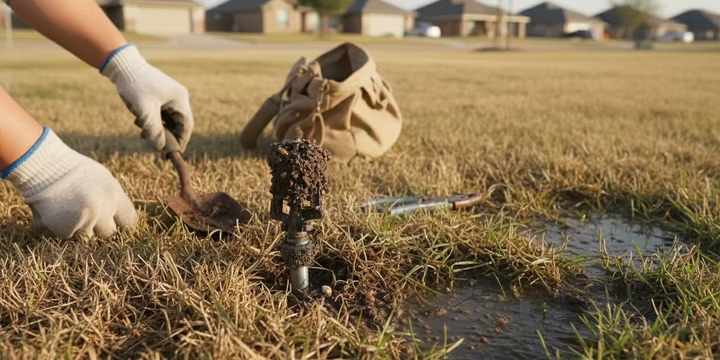
A loaded sprinkler head can turn a healthy Lubbock lawn into a patchwork of brown spots and puddles. The term refers to a sprinkler head that’s clogged with dirt, packed with debris, or stuck and unable to function correctly. It might not pop up, won’t retract, or sprays water in a weak, uneven pattern. A single broken or loaded sprinkler head can waste up to 25,000 gallons of water over a six-month irrigation season, making it one of the most expensive lawn problems to ignore.
This guide walks through how to spot a loaded head, ten practical fixes you can try (and when to hand the job off), and how to keep your system running efficiently in West Texas conditions.
If you’re already past the troubleshooting stage and need professional help, schedule a repair with a licensed Lubbock irrigator.
How to Tell If a Sprinkler Head Is Loaded (Clogged or Stuck)
Identifying a loaded sprinkler head is usually straightforward if you know what to look for. The most obvious signs appear when your system is running. You might see a head that doesn’t pop up at all, one that gets stuck in the up position, or one that sprays water in a weak, irregular pattern, flooding right around the base. Dirt, sand, and caliche grit are the most common culprits in the Lubbock area.
Other signs include:
- Sputtering or Misting: If a sprinkler head is misting instead of spraying droplets, the pressure might be too high or the nozzle is partially blocked. Practitioners on Reddit frequently note that misting in West Texas wind conditions wastes far more water than most homeowners realize, since wind carries the fine mist away before it ever hits the ground.
- Uneven Coverage: Look for distinct dry patches in your lawn, which often indicate a nearby head is not rotating or spraying correctly. For more on diagnosing this, check out why sprinklers leave dry spots.
- Flooding Around the Head: Water pooling around a single sprinkler points to a head that is broken or stuck, pouring water out instead of distributing it across the zone.
Quick Diagnosis Checklist (5 Minutes)
Before calling a professional, run through this quick check. Turn on the specific zone where you suspect a problem and walk through the area.
- Observe the Pop-Up Action: Do all heads in the zone rise fully from the ground? A loaded sprinkler head often fails to pop up completely or at all.
- Check the Spray Pattern: Is the water stream weak, or does it shoot out unevenly? Compare its performance to other working heads in the same zone. Clogged nozzles are a frequent issue.
- Inspect for Visible Debris: Look closely at the nozzle and the area around the pop-up riser. Often, you can see grass clippings, dirt, or small pebbles physically blocking the mechanism.
- Feel for Soggy Ground: Puddles or exceptionally soft ground around a sprinkler head can signal a leak or a head that’s not retracting properly.
- Listen for Odd Noises: Buzzing sounds can sometimes indicate a faulty valve solenoid, while chattering noises might point to issues with the pump relay, both of which can affect head performance.
If you run through this list and the problem isn’t a simple, visible obstruction, check our blog for additional DIY troubleshooting guides or consider calling a licensed irrigator for help.
Top 10 Loaded Sprinkler Head Fixes for Lubbock Lawns
Most loaded sprinkler head problems fall into a handful of categories: debris blockage, worn parts, improper height, or pressure issues. Here are ten fixes ranked from the simplest DIY tasks to repairs that call for a professional.
1. Clear Debris from the Nozzle and Filter Screen
This is the single most common fix for a loaded sprinkler head. Turn off the zone, grip the pop-up riser, unscrew the nozzle, and pull out the small filter screen underneath. Rinse both under a hose. Lubbock’s sandy soil and persistent wind blow grit directly into nozzle openings, so don’t be surprised if the screen is packed solid.
- Tools needed: None, or a flat-head screwdriver for stubborn nozzles.
- Time: 2 to 5 minutes per head.
- When to call a pro: If cleaning doesn’t restore the spray pattern, the problem is deeper in the system.
2. Flush the Riser and Supply Line
Sometimes the clog isn’t in the nozzle. It’s in the riser or the lateral pipe feeding the head. Remove the entire nozzle assembly, turn the zone on briefly, and let water flush upward through the open riser for 10 to 15 seconds. This pushes out sand, small rocks, and pipe shavings that settle in the line, especially after a repair or new installation.
- Tools needed: Screwdriver or nozzle removal tool.
- Time: Under 5 minutes.
- West Texas tip: Flush lines after any digging or trenching work nearby. Lubbock’s caliche soil crumbles into small chunks that travel through pipes.
3. Replace Worn Wiper Seals
The wiper seal is the rubber ring at the top of the sprinkler body that keeps dirt from entering as the riser retracts. Over time, sand grinds these seals down. A damaged wiper seal is one of the primary reasons sprinkler heads get loaded with debris repeatedly after cleaning. If you clean a head and it clogs again within a week or two, the wiper seal is likely the culprit.
- Tools needed: Replacement seal (match the brand and model), needle-nose pliers.
- Time: 5 to 10 minutes per head.
- West Texas tip: In sandy Lubbock soil, consider upgrading to heavy-duty wiper seals designed for abrasive conditions.
4. Adjust or Reset the Spray Arc
A loaded head that’s been stuck or jammed can throw off its arc setting. After cleaning, use the adjustment screw on top of the nozzle (a small flat-head screwdriver works) to reset the spray distance and pattern. Many homeowners discover that the head was technically working but aimed at the sidewalk or fence rather than the lawn.
- Tools needed: Small flat-head screwdriver or the adjustment tool that came with the head.
- Time: 1 to 2 minutes per head.
- West Texas tip: Reduce spray radius slightly on windy sides of the yard to keep water on the grass, not the street.
5. Upgrade to Pressure-Regulated (PRS) Spray Bodies
Lubbock’s municipal water pressure varies by neighborhood and time of day. If your heads are misting instead of spraying defined streams, the pressure is likely too high for standard spray bodies. Pressure-regulated spray bodies (PRS) maintain a consistent output (typically 30 PSI) regardless of incoming pressure. This single upgrade eliminates misting, reduces wind drift, and improves coverage uniformity.
- Tools needed: Shovel, PRS spray bodies (Hunter PRS or Rain Bird SAM/PRS models are common in Lubbock).
- Time: 10 to 15 minutes per head.
- When to call a pro: If you’re replacing heads across multiple zones, a licensed irrigator can match precipitation rates and ensure head-to-head coverage. M&M Sprinklers regularly handles PRS retrofits for Lubbock homes.
6. Level a Tilted or Sunken Head
A sprinkler head that’s tilted, sunken below grade, or sitting too high gets hit by mowers and buried by soil creep, which leads directly to loaded heads. Dig around the head, adjust the swing joint or funny pipe connection underneath, and reset it flush with the soil surface. The top of the head should sit at grade level when retracted.
- Tools needed: Small shovel or trowel, possibly a new swing joint.
- Time: 10 to 20 minutes per head.
- West Texas tip: Lubbock’s expansive clay soils shift with moisture changes. Heads that were perfectly level last spring may have shifted over the winter.
7. Replace a Cracked or Broken Head
If the sprinkler body itself is cracked, no amount of cleaning will fix a loaded head. Mower strikes and foot traffic are the usual causes. Replacement is straightforward: dig around the head, unscrew it from the riser or swing joint, and thread the new one in place. Match the brand, model, and nozzle type to the rest of the zone for consistent watering. Sprinkler heads typically last 5 to 10 years, so if one is cracking, others in the same zone may be close behind.
- Tools needed: Shovel, replacement head, Teflon tape.
- Time: 15 to 20 minutes.
- When to call a pro: If the fitting or swing joint underneath is also damaged, or if you’re unsure which head model matches your system.
If you’re weighing whether to fix an old system or start fresh, estimating irrigation retrofit costs can help you decide.
8. Install Check Valves to Stop Low-Head Drainage
Low-head drainage happens when water drains out of the lowest heads in a zone after the system shuts off, creating puddles and soggy spots. This standing water pushes soil and debris back up into the head, loading it with gunk. Installing spray bodies with built-in check valves (or adding aftermarket check valves) prevents this backflow. It also eliminates those frustrating wet spots that appear minutes after a cycle ends.
- Tools needed: Check-valve spray bodies or retrofit check valves, shovel.
- Time: 10 to 15 minutes per head.
- West Texas tip: Yards with elevation changes (common in Lubbock’s newer developments around the south and southwest side) are especially prone to low-head drainage.
9. Inspect and Clean the Zone Valve
Sometimes the problem isn’t the head at all. A zone valve that won’t open fully restricts water flow to every head on that zone, making them look loaded or clogged when they’re actually starved for pressure. Dirt or a small rock lodged in the valve diaphragm is a common cause. Shut off the water supply, open the valve box, remove the solenoid and diaphragm, and clean the seat. If the diaphragm is torn or warped, replace it.
- Tools needed: Screwdriver, replacement diaphragm (if needed).
- Time: 15 to 30 minutes.
- When to call a pro: Valve work involves electrical connections. If you’re not comfortable with wiring or the valve box is flooded, a licensed irrigator should handle it. For more on valve issues, see M&M’s guide on diagnosing valve and solenoid problems.
10. Switch to Matched-Precipitation Nozzles
This is less of a quick fix and more of a system upgrade, but it solves a root cause of uneven coverage that makes individual heads look like they’re failing. Matched-precipitation nozzles deliver the same inches-per-hour regardless of the spray arc (90°, 180°, 360°). Without them, quarter-circle heads water four times faster than full-circle heads on the same zone, creating floods and dry spots that mimic loaded head symptoms.
- Tools needed: Matched-precipitation nozzle set (Hunter MP Rotators or Rain Bird HE-VAN are popular choices).
- Time: 2 to 3 minutes per head to swap nozzles, but planning the nozzle selection for each head takes longer.
- When to call a pro: Getting precipitation rates right across a whole system requires calculating arc, radius, and spacing. This is where a professional like M&M Sprinklers adds real value, especially on older Lubbock systems that were never designed with matched precipitation in mind.
When to Call a Professional Irrigator in Lubbock
The first few fixes on this list are genuine DIY territory. Cleaning a nozzle, flushing a riser, adjusting an arc: these take minutes and cost nothing. But a loaded sprinkler head is sometimes a symptom of a bigger issue, like a leaking lateral line, a failing valve, or system-wide low pressure. When the problem goes beyond what a garden hose rinse can solve, it’s time for a licensed irrigator.
Signs you need professional help:
- The head keeps clogging within days of cleaning (possible pipe break introducing dirt into the line)
- Multiple heads on the same zone are underperforming (likely a valve or pressure issue)
- You see water bubbling up between heads (underground leak)
- Your water bill has spiked without an obvious cause
- The controller won’t activate certain zones (wiring or solenoid fault)
The team at M&M Sprinkler and Tree Services has been diagnosing and repairing irrigation systems in Lubbock since 1987. With a licensed irrigator and licensed irrigation technicians on staff, and a 5.0-star rating across more than 390 Google reviews, they handle everything from single head replacements to full system renovations. They also carry a Texas Backflow Prevention Assembly Tester (BPAT) license, so if your backflow preventer needs testing or repair, that’s handled in-house rather than subcontracted out.
Practitioners on Reddit’s Lubbock forums have noted the challenge of getting timely irrigation service during peak season. M&M addresses this with membership-based maintenance plans that include preferred scheduling and priority waitlist access, which matters when every irrigation company in town is booked solid in June.
Sprinkler Head Replacement and New Installations Near Lubbock
While many sprinkler heads can last for years, they are often the first component to wear out, with a typical lifespan of 5 to 10 years. Damage from lawnmowers or heavy foot traffic is also a common reason for failure. If a loaded sprinkler head is cracked or the internal seals are worn beyond repair, cleaning it won’t solve the problem. Replacement is the right move.
For homeowners in Lubbock and the surrounding communities like Wolfforth, Shallowater, Levelland, and Plainview, M&M Sprinklers offers expert sprinkler head replacement and system renovations. Their approach centers on proper head-to-head coverage and selecting the right equipment for the region’s sandy soil, high winds, and hard water. They also handle case-by-case new system installations designed for maximum efficiency and minimal lawn disturbance.
Preventive Maintenance That Stops Loaded Heads Before They Start
The most effective way to deal with a loaded sprinkler head is to prevent it from happening in the first place. Regular maintenance is crucial. Up to 50% of outdoor water use is wasted due to inefficient or poorly maintained irrigation systems. Simple, routine checks can keep your system running efficiently, lower your water bill, and prevent emergency repairs.
Practitioners on Reddit report that the biggest mistake homeowners make is only inspecting sprinkler heads after visible problems appear. By then, weeks of water waste have already hit the utility bill.
Here’s a basic seasonal checklist any Lubbock homeowner can follow:
- Spring: Run each zone manually and walk the yard. Look for heads that don’t pop up, spray weakly, or leak. Clean nozzles and filters.
- Summer: Check spray patterns monthly, especially after mowing. Adjust runtimes for Lubbock’s twice-weekly watering schedule and water during calm, early morning hours to reduce wind drift.
- Fall: Reduce runtimes as temperatures drop. Inspect wiper seals and replace any that show wear.
- Winter: Insulate backflow preventers and exposed pipes before hard freezes. Lubbock’s sudden temperature drops can crack components overnight.
For homeowners who want this handled for them, M&M Sprinklers offers maintenance plans designed to keep systems in top shape year-round. Their Gold Plan includes four scheduled visits per year with complete system inspections, head adjustments, leak checks, seasonal programming, and up to four free sprinkler heads per visit. The Technology Plan adds live flow monitoring and automatic alerts for breaks or clogs, so a loaded sprinkler head gets caught before it wastes water or damages your lawn.
Compare maintenance plan options
From Loaded to Full Coverage
A loaded sprinkler head is more than an annoyance. It’s a source of water waste and a direct threat to the health of your lawn. Most of the time, the fix is simple: clean the nozzle, flush the line, replace a worn seal. When the problem runs deeper (valve issues, low pressure, underground leaks), a licensed irrigator saves you time, water, and money by finding the actual root cause instead of chasing symptoms.
For expert sprinkler repair and maintenance in the Lubbock area, reach out to M&M Sprinklers to schedule your service. They serve Lubbock and surrounding West Texas communities including Wolfforth, Shallowater, Levelland, Littlefield, Post, Brownfield, Plainview, and beyond.
FAQ
What is a loaded sprinkler head?
A loaded sprinkler head is a sprinkler that is clogged or jammed with debris like dirt, sand, or grass clippings. This prevents it from popping up, retracting, or spraying water correctly, leading to poor lawn coverage and water waste. The term is also used in fire protection to describe a fire sprinkler head coated with material that could prevent activation, but that’s a completely different system governed by NFPA 25 and has nothing to do with your lawn irrigation.
Can I fix a loaded sprinkler head myself?
For simple clogs, yes. Turn off the water, unscrew the nozzle, and clean the filter screen and nozzle with water. If the head is cracked, the wiper seal is worn, or the problem is low water pressure across the zone, call a licensed irrigator.
Why won’t my sprinkler head pop up?
The most common reason is that debris is blocking the pop-up mechanism, making it a loaded sprinkler head. Other causes include low water pressure in the zone, a broken riser or spring, a damaged wiper seal letting dirt pack around the stem, or a leak in the pipe supplying water to that head.
How often should sprinkler heads be replaced?
Sprinkler heads typically last between 5 and 10 years. Inspect them at least once a year (ideally each spring) and replace any that are visibly cracked, leaking, or consistently malfunctioning after cleaning.
What causes low pressure in a sprinkler system?
Low pressure can be caused by a leak in the main water line, a failing or partially closed valve, a clogged backflow preventer, or too many sprinkler heads on a single zone. A loaded sprinkler head itself does not cause system-wide low pressure, but it can be a symptom of it.
Why is only one of my sprinkler heads not working?
If only a single head is malfunctioning, the problem is most likely a loaded sprinkler head (debris clog) or a broken head. Check it for visible clogs or damage. If cleaning doesn’t fix it, replace the head and match the nozzle type to the rest of the zone.
Does a loaded sprinkler head waste a lot of water?
Yes. A single malfunctioning sprinkler head can waste thousands of gallons per season. A head stuck in the up position or one that floods at the base instead of distributing water across its arc will spike your water bill and create soggy, unhealthy turf.
What is a sprinkler system “Wellness Check”?
A Wellness Check is a preventative maintenance visit, like the service offered through M&M Sprinklers’ maintenance plans. A technician runs each zone, inspects every head for clogs and damage, checks for leaks, adjusts spray patterns, and programs the controller for the current season. It’s the most reliable way to catch a loaded sprinkler head before it causes problems.
Does NFPA 25 apply to my lawn sprinkler heads?
No. NFPA 25 governs the inspection and maintenance of water-based fire protection systems, not landscape irrigation. If your home has a residential fire sprinkler system (more common in newer construction), those fire sprinkler heads fall under NFPA 25 and should be inspected by a licensed fire protection contractor. Your lawn irrigation system is a completely separate system with no federal inspection requirement.
Who should I call for sprinkler repair in Lubbock?
Look for a licensed irrigator with local experience. M&M Sprinklers has operated in Lubbock since 1987, has a licensed irrigator and licensed irrigation technicians on staff, and holds a 5.0 rating on more than 390 Google reviews. They handle everything from single head replacements to full system renovations, plus backflow testing and certification. Call (806) 794-1300 or visit their website to schedule service.