West Texas is tough on trees. Between alkaline soils, extreme heat, low humidity, and unpredictable freeze events, trees in the Lubbock area face stress that most regions never deal with. That stress opens the door to disease. Knowing what to look for on your property can mean the difference between a simple treatment and losing a mature tree entirely.
This guide covers the most common tree diseases found in West Texas, how to spot them, and when it’s time to bring in a professional.
Why West Texas Trees Are Especially Vulnerable
Before identifying specific diseases, it helps to understand why trees around Lubbock, Levelland, Plainview, and the surrounding towns get sick in the first place.
West Texas soils are predominantly alkaline with high caliche content. Many tree species struggle to absorb iron and other micronutrients in these conditions, which weakens their natural defenses. Combine that with summer temperatures regularly exceeding 100°F, low annual rainfall (under 19 inches in most years), and occasional late spring freezes, and you have trees under near-constant stress.
Stressed trees are vulnerable trees. Fungal and bacterial pathogens that a healthy tree could fight off become serious threats when the tree is already weakened by drought, compacted soil, nutrient deficiencies, or improper watering.
Practitioners on Reddit and local gardening forums frequently point out that many tree problems in the Lubbock area start with watering issues, either too much or too little, rather than the disease itself. The disease is often the secondary problem.
Oak Wilt
Oak wilt is one of the most destructive tree diseases in Texas, and it has been confirmed in areas of West Texas. It’s caused by the fungus Ceratocystis fagacearum, which blocks the tree’s water-conducting vessels.
How to Identify It
- Red oaks die rapidly, often within weeks. Leaves develop a bronzed or brown discoloration starting at the tips and edges, then drop while still partially green. You may notice a mix of green and brown leaves falling simultaneously.
- Live oaks decline more slowly, sometimes over several months or years. Leaves develop yellow or brown veins in a pattern called “veinal necrosis,” with distinct lines between healthy green tissue and dead brown tissue.
- Fungal mats may form under the bark of dead red oaks, producing a sweet, fruity smell that attracts the sap-feeding beetles that spread the disease.
What to Do
Oak wilt spreads through root grafts between nearby oaks and through insect vectors. If you suspect oak wilt, stop pruning immediately (open wounds attract the beetles that carry the fungus) and contact a certified arborist. Confirming oak wilt requires lab testing, which is available through the Texas A&M Plant Disease Diagnostic Laboratory. Trenching to sever root connections between trees may be necessary to stop underground spread.
Hypoxylon Canker
This is arguably the most common tree killer homeowners encounter in West Texas. Hypoxylon canker is caused by the fungus Biscogniauxia atrounctata (formerly Hypoxylon atropunctatum), and it almost exclusively attacks trees that are already severely stressed.
How to Identify It
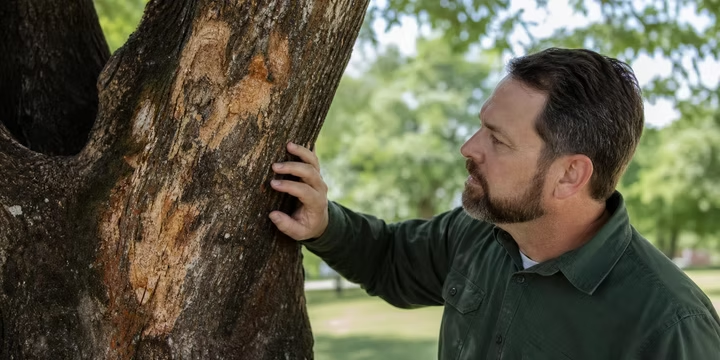
- Bark begins sloughing off in patches, revealing a dusty, powdery layer on the wood surface underneath. This layer can be tan, olive, gray, or dark brown depending on the stage.
- Affected areas often appear on the trunk or major limbs first. The exposed wood looks like it’s been coated in a chalky or sooty powder.
- Canopy dieback accelerates rapidly once bark loss becomes visible.
What to Do
Here’s the hard truth: by the time you see hypoxylon canker, the tree is almost always too far gone to save. The fungus lives in healthy trees without causing problems. It only becomes destructive when the tree is stressed beyond its ability to cope, typically from drought, construction damage to roots, soil compaction, or severe overwatering.
Prevention is everything with hypoxylon. Proper watering, soil health management, and avoiding root zone damage are the best defenses. If you see bark falling off and exposing powdery fungal growth, have the tree evaluated for removal before it becomes a hazard.
Cotton Root Rot
Cotton root rot (Phymatotrichopsis omnivora) is a soil-borne fungal disease that thrives in the alkaline, calcareous soils found across West Texas. It kills more than 2,000 plant species and is particularly devastating because it attacks roots directly.
How to Identify It
- Trees wilt suddenly during summer heat, often in a matter of days, despite adequate irrigation.
- Leaves may remain attached to the tree even after turning brown, giving the tree a scorched appearance.
- If you dig around the root zone, you may find roots covered in tan or brown fungal strands. In some cases, a white, spore-producing mat appears on the soil surface after rain.
- The disease typically shows up in mid-summer when soil temperatures are highest.
What to Do
Cotton root rot is notoriously difficult to treat once established. Some arborists have had success with soil amendments and fungicide applications when caught early. Improving soil biology through organic treatments and deep-root feeding can help create conditions less favorable to the fungus. If you lose a tree to cotton root rot, replacing it with a resistant species (most monocots and some native trees are resistant) is often the smartest long-term move.
Fire Blight
Fire blight is a bacterial disease caused by Erwinia amylovora that commonly affects ornamental pear trees (including the Bradford pears planted widely across Lubbock), apple trees, and other members of the rose family.
How to Identify It
- New growth at branch tips wilts and turns black or dark brown, curling into a distinctive “shepherd’s crook” shape.
- Affected leaves look like they’ve been scorched by fire, hence the name.
- Cankers (sunken, discolored areas) form on branches and the trunk, sometimes oozing a sticky bacterial liquid during warm, wet weather.
- The disease often appears in spring after warm, rainy periods, especially following bloom.
What to Do
Prune infected branches at least 12 inches below the visible damage. Between every cut, disinfect your pruning tools with a 10% bleach solution or 70% rubbing alcohol. Severe infections may require removal of the tree. Avoid heavy nitrogen fertilization of susceptible species, as lush new growth is more vulnerable to infection.
Bacterial Leaf Scorch
Bacterial leaf scorch is caused by the bacterium Xylella fastidiosa, which is spread by leafhopper and spittlebug insects. It affects several tree species common in West Texas, including red oaks, elms, and sycamores.
How to Identify It
- Leaves develop brown, scorched margins that progress inward. A yellow or reddish band often separates the dead tissue from the still-green interior of the leaf.
- Symptoms typically appear in late summer and get worse each year.
- The pattern of decline is gradual. A few branches show symptoms the first year, then more the next, slowly spreading through the canopy over several seasons.
- It can look a lot like drought stress, which is why it’s frequently misdiagnosed.
What to Do
There is no cure for bacterial leaf scorch. Antibiotic injections can suppress symptoms temporarily, but the bacteria will persist. Proper irrigation and soil health management can extend the life of an infected tree for years. Lab testing through facilities like the Texas A&M diagnostic lab is necessary for a definitive diagnosis, because the symptoms overlap with so many other problems.
Powdery Mildew
Powdery mildew is a group of fungal diseases that affect a wide range of trees and shrubs. In West Texas, it shows up frequently on crape myrtles, oaks, and various ornamentals.
How to Identify It
- A white or grayish powdery coating appears on leaves, shoots, and sometimes flowers.
- Affected leaves may curl, yellow, or drop prematurely.
- Unlike most fungal diseases, powdery mildew thrives in warm, dry conditions with cool nights, making it well-suited to the West Texas climate.
What to Do
Powdery mildew is rarely fatal to established trees, but it’s unsightly and can weaken young or stressed trees over time. Improving air circulation through proper pruning helps. Fungicide applications are effective if applied early. Selecting resistant varieties when planting new trees or shrubs is the simplest prevention strategy.
Anthracnose
Anthracnose is a fungal disease that affects sycamores, oaks, elms, and ash trees. It tends to appear during cool, wet spring weather.
How to Identify It
- Irregular brown or tan dead spots appear on leaves, often along the veins.
- Leaves may curl, distort, or drop early in the season.
- On sycamores, anthracnose can cause severe twig dieback and leaf drop, sometimes defoliating much of the tree in spring. The tree usually releafs by summer, but repeated annual infections weaken it.
What to Do
Most healthy, mature trees recover from anthracnose without treatment. Raking and disposing of fallen leaves reduces the fungal spore load for the following year. Severely affected trees benefit from targeted fungicide applications and improved growing conditions.
Wetwood (Slime Flux)
Wetwood is a bacterial condition that causes dark, foul-smelling liquid to seep from cracks, wounds, or branch stubs on the trunk. Elms and cottonwoods in the Lubbock area commonly develop it.
How to Identify It
- Dark, wet-looking streaks running down the trunk from a wound or crack.
- The liquid often has a sour or fermented smell.
- Bark in the affected area may appear water-soaked or discolored.
- Grass or plants at the base of the tree may die where the liquid drips.
What to Do
Wetwood itself rarely kills trees, but the underlying bacterial infection can slow growth and weaken the tree over time. Old recommendations to drill drainage holes have been abandoned, as they cause more harm than good. Proper wound care, avoiding unnecessary pruning cuts, and maintaining overall tree health are the best approaches.
Stress Factors That Invite Disease
Many tree diseases in West Texas are opportunistic. They take hold only when a tree’s defenses are compromised. Some of the most common stress factors homeowners and property managers should watch for include:
- Overwatering. Sprinkler systems set for turf grass often deliver far too much water to tree root zones, suffocating roots and creating conditions favorable to root rot fungi. This is one of the most common problems arborists encounter in irrigated Lubbock landscapes.
- Underwatering. Conversely, trees outside irrigated zones or on properties without supplemental water can suffer severe drought stress, especially during July and August.
- Soil compaction. Construction traffic, heavy foot traffic, and even years of mowing compact soil around tree roots, reducing oxygen and water penetration.
- Improper pruning. Over-pruning (removing more than 25% of the canopy at once) triggers a stress response. Topping, lion-tailing, and flush cuts cause wounds that invite decay fungi and bacteria.
- Planting too deep. Trees planted with the root flare buried below grade develop girdling roots and bark decay at the soil line. This is surprisingly common and often goes unnoticed for years.
- Nutrient deficiencies. Iron chlorosis (yellowing leaves with green veins) is widespread in West Texas due to alkaline soils that lock up iron. Chronic nutrient deficiency weakens a tree’s ability to fight off pathogens.
Addressing these stress factors is often more important than treating the disease itself. A tree with healthy soil, proper water management, and good structure can resist most of the pathogens on this list.
When to Call a Certified Arborist
Some tree problems are straightforward enough for homeowners to manage. Powdery mildew on a crape myrtle, a few anthracnose-spotted leaves on a sycamore, these don’t necessarily require professional intervention.
But several situations call for expert help:
- Rapid decline. A tree that wilts or drops leaves suddenly during the growing season could have oak wilt, cotton root rot, or a serious vascular disease. Speed matters.
- Bark falling off. Exposed wood with powdery or crusty fungal growth (hypoxylon canker) means the tree may need to be removed before it fails.
- Structural concerns combined with disease. A diseased tree with large dead branches, trunk cavities, or significant lean is a safety issue.
- Uncertain diagnosis. Many tree diseases look alike, especially in their early stages. Bacterial leaf scorch mimics drought stress. Nutrient deficiency mimics certain fungal infections. A correct diagnosis requires experience, and sometimes lab testing.
- Multiple trees affected. Diseases like oak wilt spread through root systems. If one tree is sick, adjacent trees may be at risk, and containment strategies need to start quickly.
A certified arborist can collect tissue and soil samples, send them to diagnostic labs like the Texas A&M Plant Disease Diagnostic Laboratory, and develop a treatment plan based on confirmed results rather than guesswork.
Keeping West Texas Trees Healthy Long-Term
The best defense against tree disease in West Texas comes down to reducing stress. That means matching irrigation to a tree’s actual needs (not the turf schedule), maintaining soil health through proper nutrition and organic amendments, pruning correctly and at the right time of year, and catching problems early.
Trees are long-term investments. A mature shade tree in Lubbock can reduce summer cooling costs, increase property value, and improve quality of life. Protecting that investment starts with knowing what to look for and acting before a manageable problem turns into a removal job.
If you notice any of the symptoms described above on your property, or if your trees just don’t look right and you can’t pinpoint why, getting a professional evaluation is worth the cost. Early intervention saves trees, and it saves money.